I made a few updates to the site, mostly focusing on updating the home page sidebar to have some actual information. The old side bar was just place holder text from the tutorial I found, but the new side bar is populated with the last (3) comments made on the …
A long time coming... a professional level plugin for ETABs, or at least a whole lot better than the python diaphragm slicer.
User Input
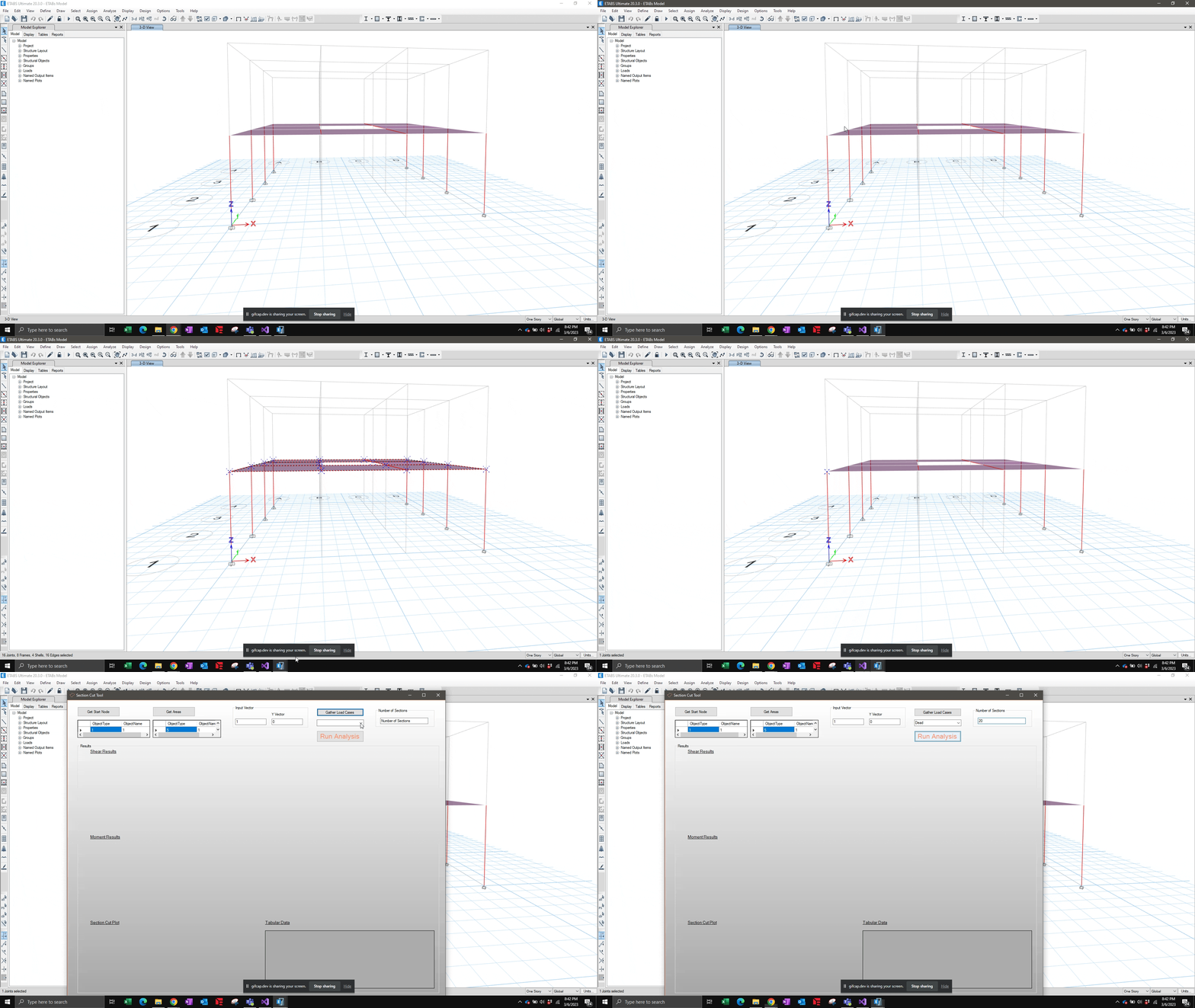
Results

This plugin will allow you to slice up your diaphragm in …

Having nailed down the initial steps of creating a plugin, I set out to do some real functional work with the plugin. Being naive, I went off the deep end to begin programming the diaphragm slicer, but was quickly met by a sea of syntax …
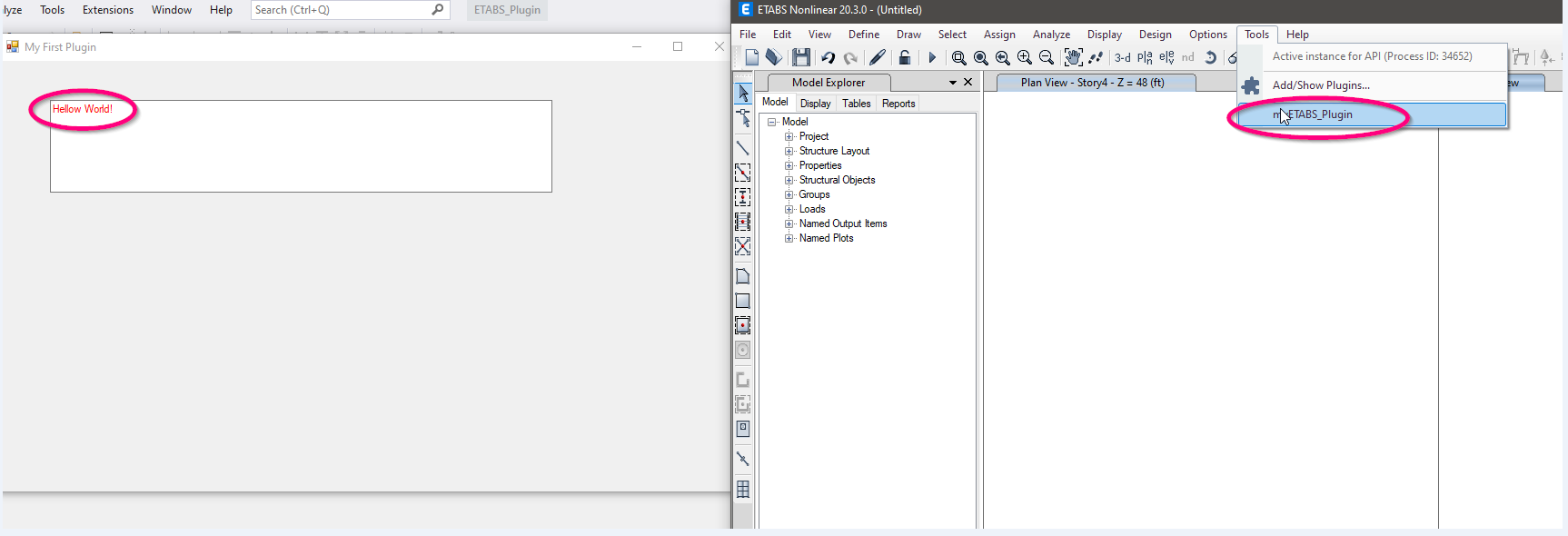
My first "Hello World" addin for ETABs is shown above. No matter how many times you see it, it is always satisfying to get Hello World to print out.
To make the addin, I followed Jeremy's examples on his website. Big thanks to him and his …
 After unlocking the first part of the RAM API, I wanted to create a practical example of how this could be used to automate a few tedious tasks that we perform in the office.
Chord and Collector Design, A Tedious Task
I chose chord and collector design …
Sidebar
Site Info
- Latest Comments
- retug on ETABs Parametric Building
-
Toni,
Please take the new concrete design tool for a spin.
There is a nice new export to excel button for your use, MM diagrams, and additional parameters for the concrete section in question.
Thanks,
Retug
- Toni on ETABs Parametric Building
-
Retug,
I have a request for the site. For the P&M output into excel, could you add a header with the basic parameters? Width, height, reinforcement provided so the pasting has context as to which output it is for?
Thanks,
Toni
- retug on ETABs Parametric Building
-
@Toni, this post does not discuss the level of mesh refinement required. The focus is on building an ETABS model efficiently. Mesh refinement is typically evaluated within ETABS by studying the parameter of interest and refining the mesh until the results converge to an acceptable tolerance.
@fpsstructures, I edited your …