I have used ETABs one way load distribution button for a long time and it works great on flat floors and "slightly sloped roof" to distribute load based on tributary area.
Today though, a coworker of mine noticed on a slightly more pitched roof, angle of about 30 degrees, the one way loading was not working as intended (could not see applied loading due to tributary area).
I built a test model to explore the odd behavior.
Slab section properties uses one way distribution:

(3) sample floors are made, each with the same load and beam restraint layout, but you can see, once the floor becomes "too sloped", the load distribution switches from a line load on the frame elements to merely point loads applied at the edge of the membrane
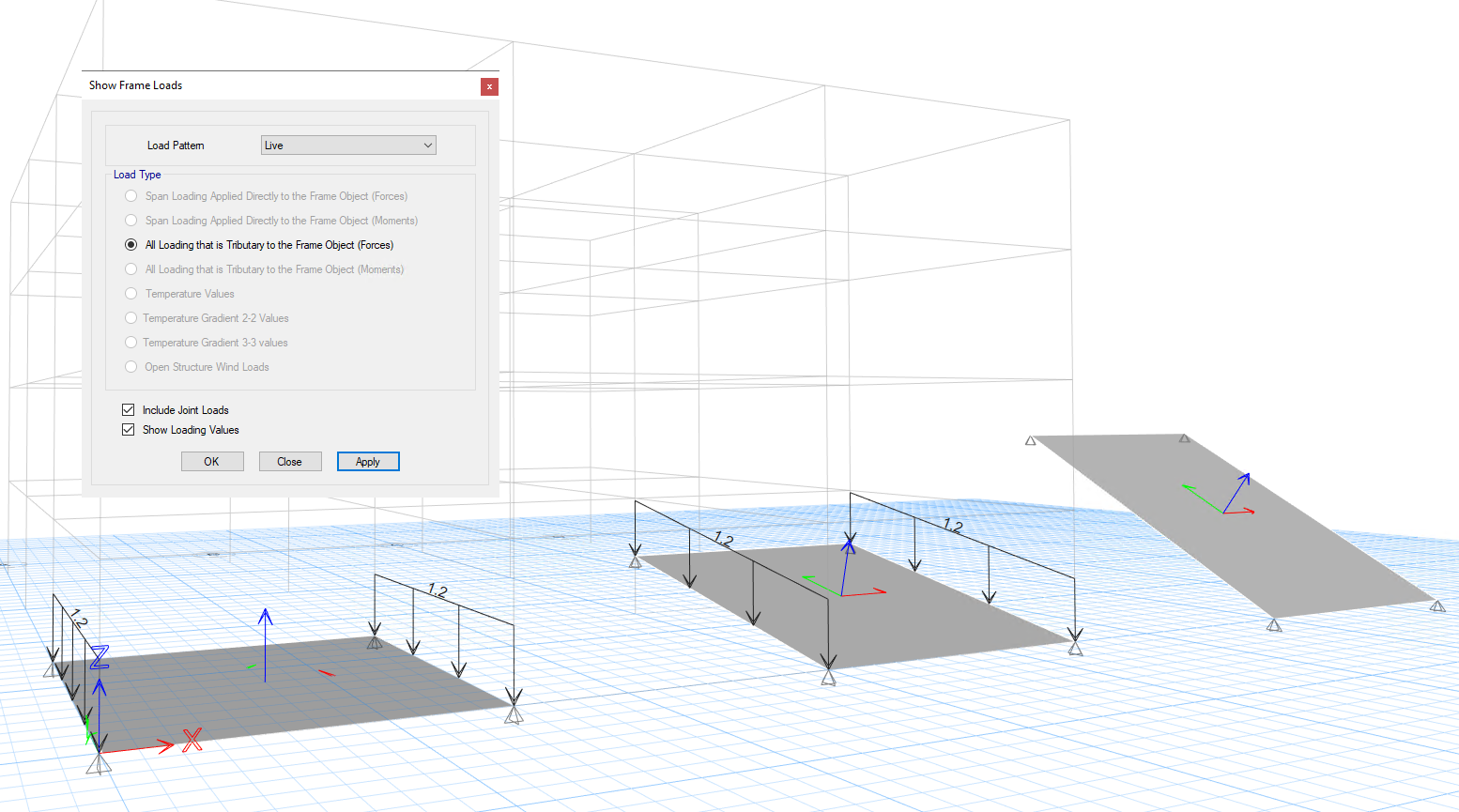

The magic slope where this seems to occur is about 20 degrees from horizontal.
Edit 2024-10-22
It appears that this 20 degree number is in the Set Tolerances button of ETABs, tweak away.

Hopefully this post saves someone in the future the pains of troubleshooting this odd behavior